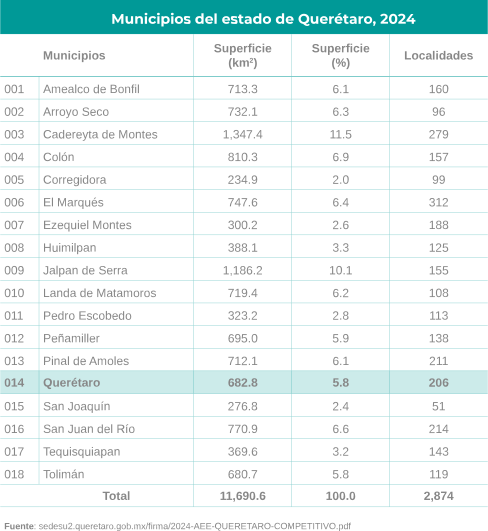
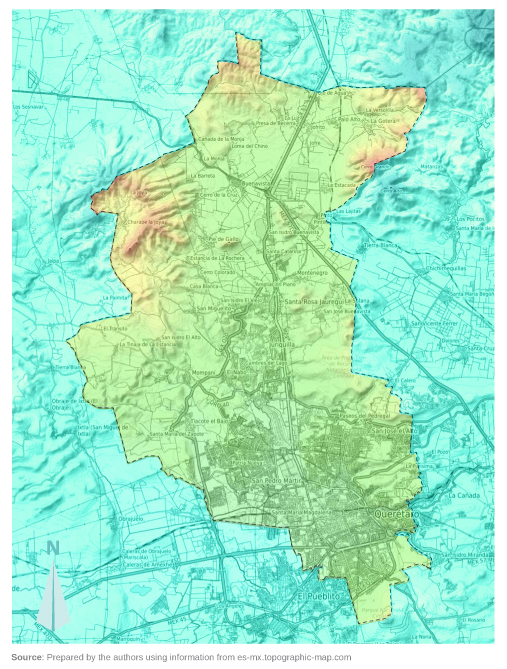
The state of Querétaro is composed of 18 municipalities, one of which is the Municipality of Querétaro. It is located in the southwest region of the state, between the parallels 20° 30’ and 20° 55’ north latitude, and between the meridians 100° 17’ and 100° 36’ west longitude.
The Municipality of Querétaro borders the municipalities of Corregidora and Huimilpan to the south; El Marqués to the east; and the state of Guanajuato to the northwest. Its territory represents 5.8% of the state’s total area, which spans 11,690.6 km².
Total Area of the State
Arid and semi-arid climates
Warm sub-humid climate
Temperate sub-humid climate
Temperate humid climate
51.0% of the state’s territory features dry and semi-dry climates, predominantly in the central region; 24.3% has a warm sub-humid climate, characteristic of the Sierra Madre Oriental; 23.0% exhibits a temperate sub-humid climate, present in the southern, central, and northeastern regions. Toward the northeast, 1.0% of the state experiences a warm humid climate, while the remaining 0.7% has a temperate humid climate.
Winds blowing from east to west influence the state’s climate by carrying moisture from the Gulf of Mexico. The mountainous zone of the Sierra Madre Oriental acts as a natural barrier, contributing to the formation of distinct climates across the region.
In the month of May, the territory experienced a maximum temperature of 36°C, while in December the minimum temperature reached 9.9°C. The highest recorded precipitation was 187.9 millimeters.
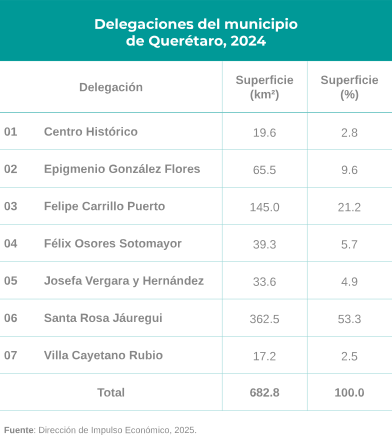
The terrain of the Municipality of Querétaro consists of rolling hills, mountain ranges, and plains. The rolling hills, characterized by gently rounded elevations, are accompanied by plains that extend from south to north and can be observed running parallel to the Querétaro–San Luis Potosí highway. The elevation of this plain ranges between 1,800 and 1,900 meters above sea level (masl).
Highest Elevation of the Municipality
Santa Rosa Jáuregui
CONABIO Registry in the Metropolitan Area
0 Families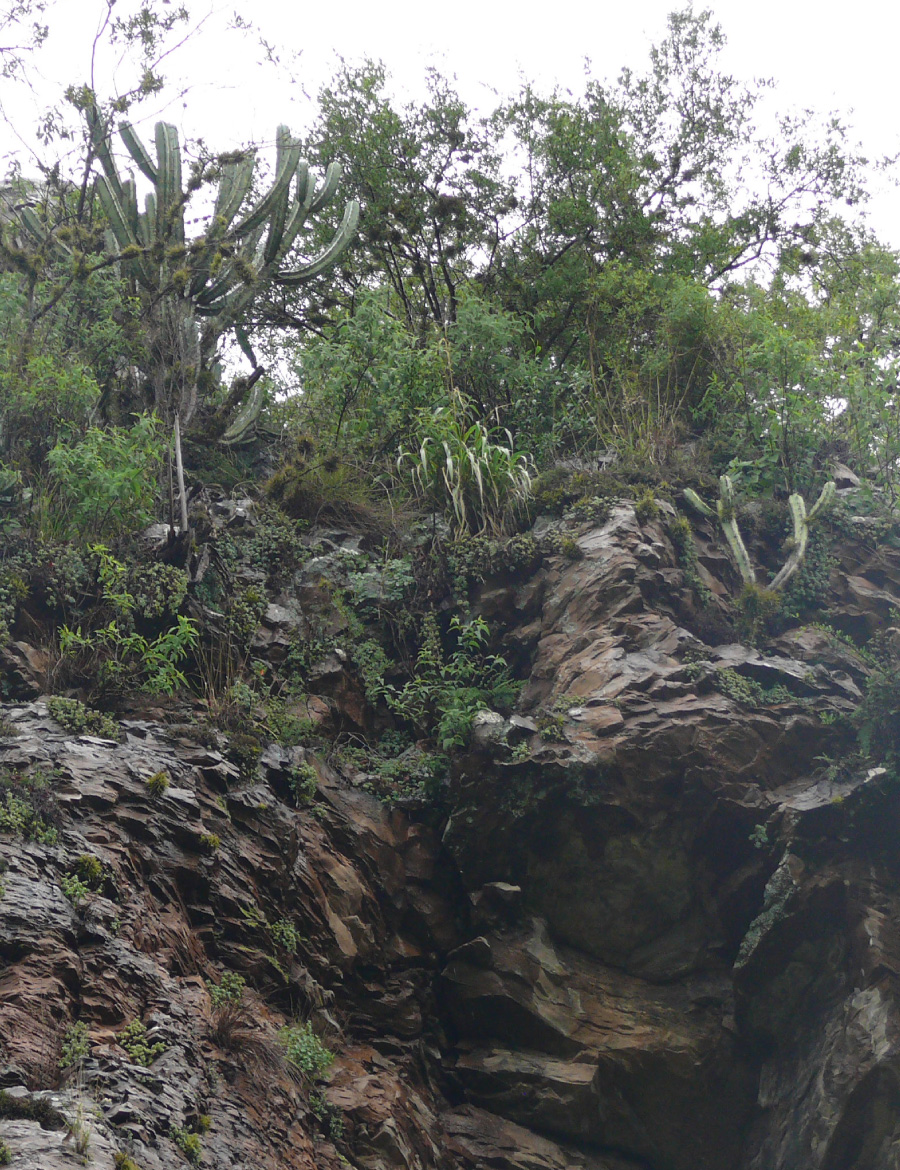
The National Commission for the Knowledge and Use of Biodiversity (CONABIO) conducted an inventory indicating the presence of approximately 400 representative species, distributed across 77 families, within the metropolitan area. Among the most notable are: Acanthaceae, Agavaceae, Asteraceae, Cactaceae, Compositae, Gramineae, Fabaceae, Poaceae, and Solanaceae.
The word edaphology comes from the Greek édaphos, meaning “surface of the earth.” This discipline studies soil from various perspectives, including its morphology, composition, formation, and evolution, as well as its taxonomy, utility, restoration, and conservation.
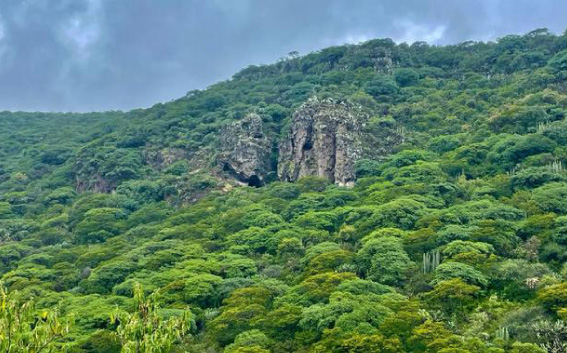
The Municipality of Querétaro features a variety of ecosystems, including oak forests and tropical deciduous forests (also known as tropical dry forests), chaparral, crassicaulous and subtropical scrublands, induced and natural grasslands, as well as aquatic and riparian vegetation.
The development of wildlife is shaped by the biotic and abiotic factors of each region, including elements such as climate, temperature, and water availability. Querétaro is home to a wide variety of wild macrofauna, particularly in areas such as the La Joya volcano, the escarpments of El Tángano and El Cimatario, as well as the canyons of Mompaní, San Miguelito, Cerro Grande, Peña Colorada, and Rancho Raspiño–Charape de los Pelones, where small ground-dwelling animals live and find refuge.
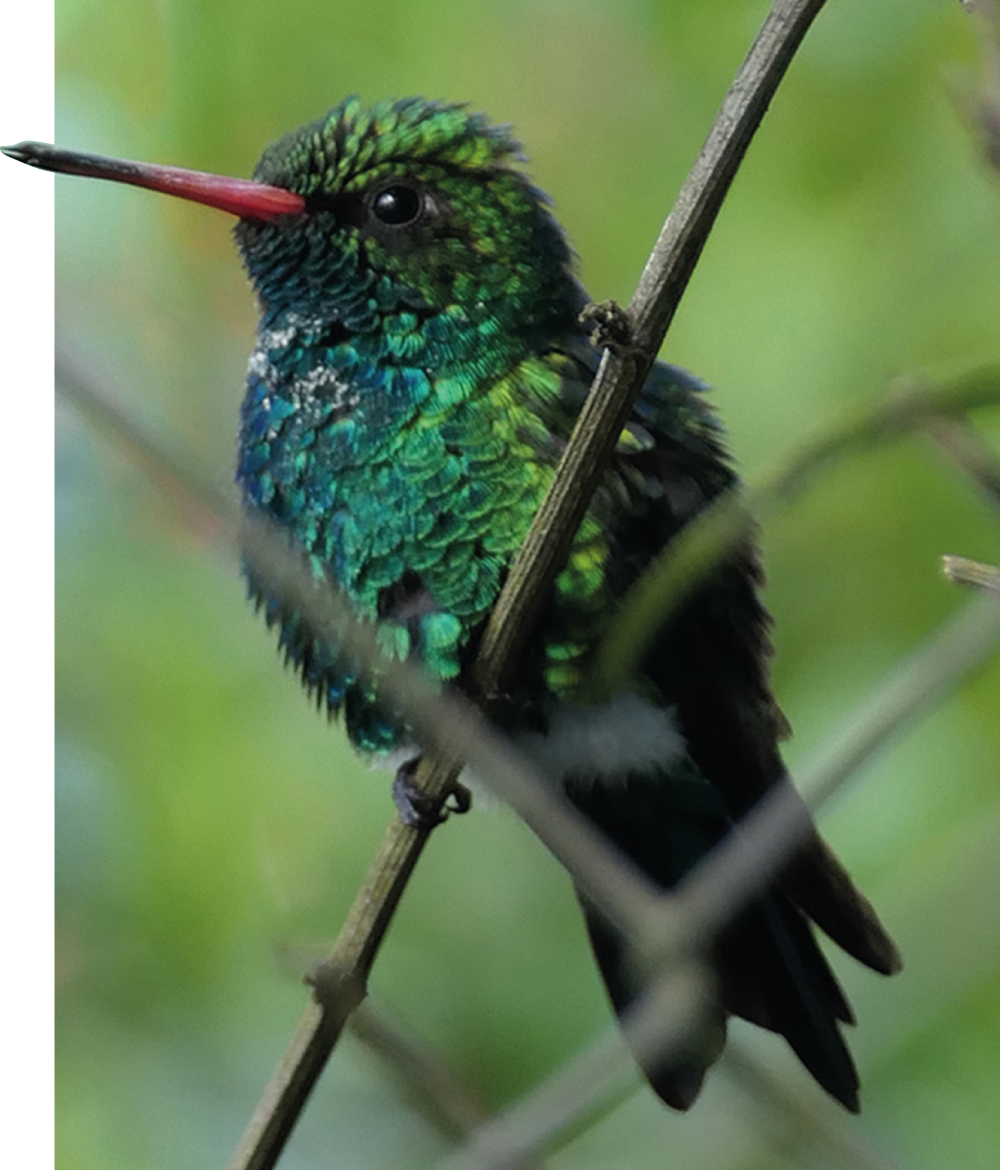
Among the predominant animals that form part of the macrofauna are the rattlesnake (Crotalus sp.); birds such as the vermilion flycatcher (Pyrocephalus rubinus) and the red-tailed hawk (Buteo jamaicensis); and mammals such as the gray fox (Urocyon cinereoargenteus), striped skunk (Conepatus mesoleucus), and ringtail (Bassariscus astutus). In addition, sightings of coyotes (Canis latrans) and bobcats (Lynx rufus) have been recorded.
The National Commission for the Knowledge and Use of Biodiversity compiled a wildlife inventory that includes a specific database for the Municipality of Querétaro, listing the protection status assigned to each species.
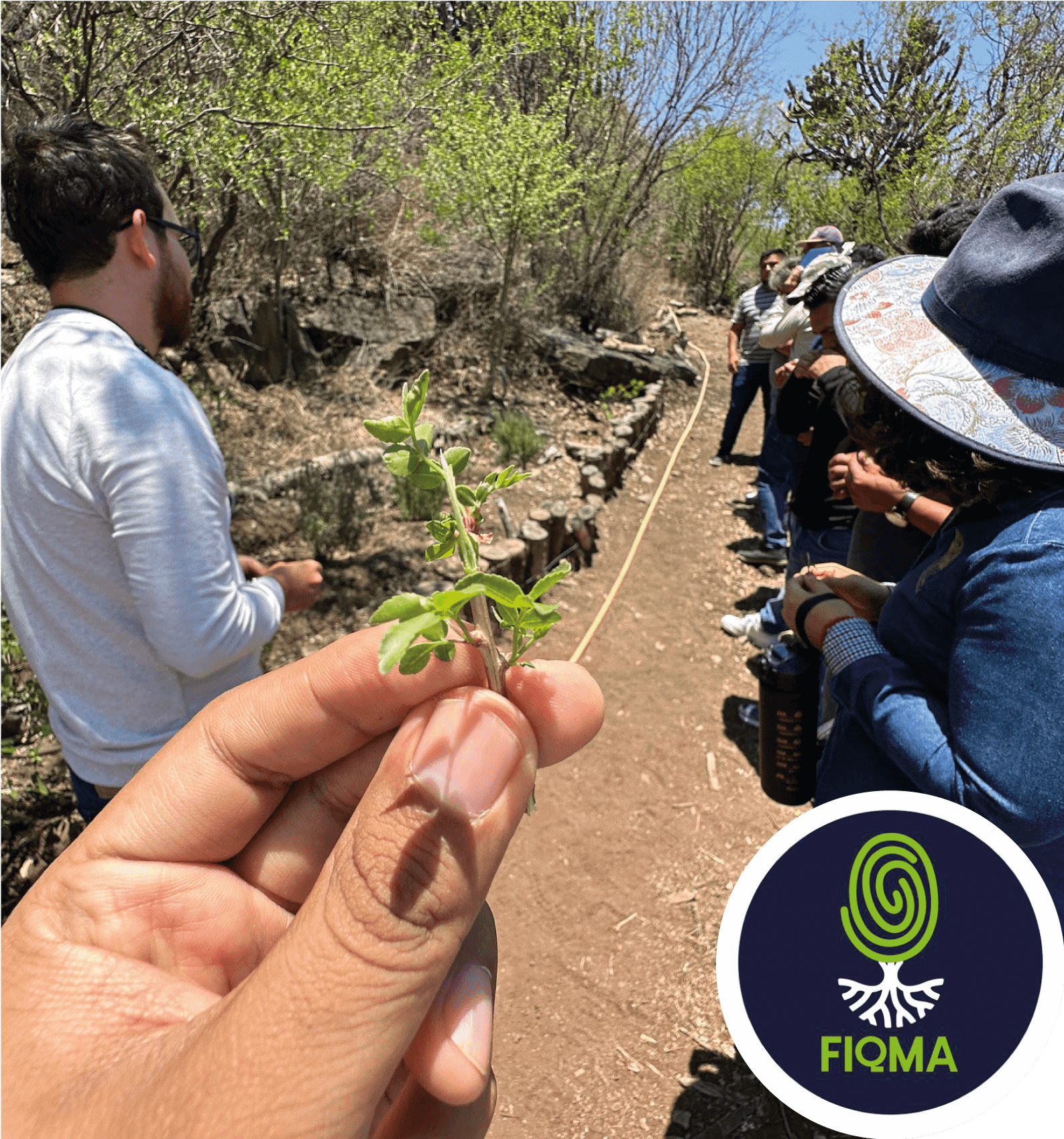
Ecological restoration is a process aimed at returning an ecosystem to its original state or as close as possible to its condition prior to disturbance caused by human activities. One of the key actions that contribute to this process is the planting of native vegetation, which helps improve the ecological functionality of the environment.
The Municipality of Querétaro has the Querétaro Environmental Trust Fund (Fideicomiso Queretano del Medio Ambiente, FIQMA), whose objective is to support the conservation of the region’s environmental assets. In 2024, a total of 5.5 hectares were restored through the planting of 1,109 trees across various municipal delegations.
With a TIF 412 classification, it is recognized as the main meat supply center in the state, also supplying entities such as Guanajuato, Durango, Mexico City, and the State of Mexico.

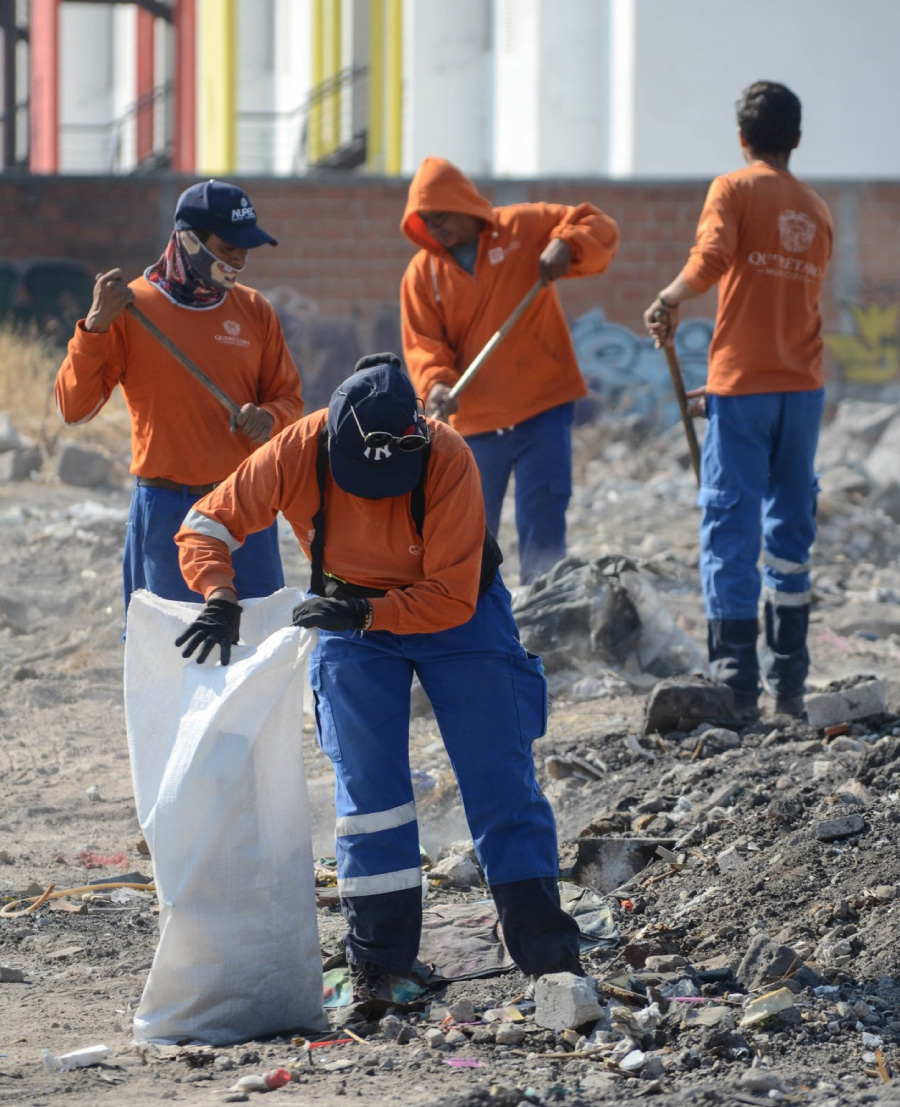
Public services are essential for economic and social development, as they reduce poverty and improve the population’s quality of life. Their provision must be efficient, ensuring the necessary access and coverage to respond in a timely and appropriate manner to social needs.
The Municipal Public Services Ministry directly and effectively delivers the services required by the citizens of the municipality of Querétaro, addressing various social needs through its departments and coordinating units.
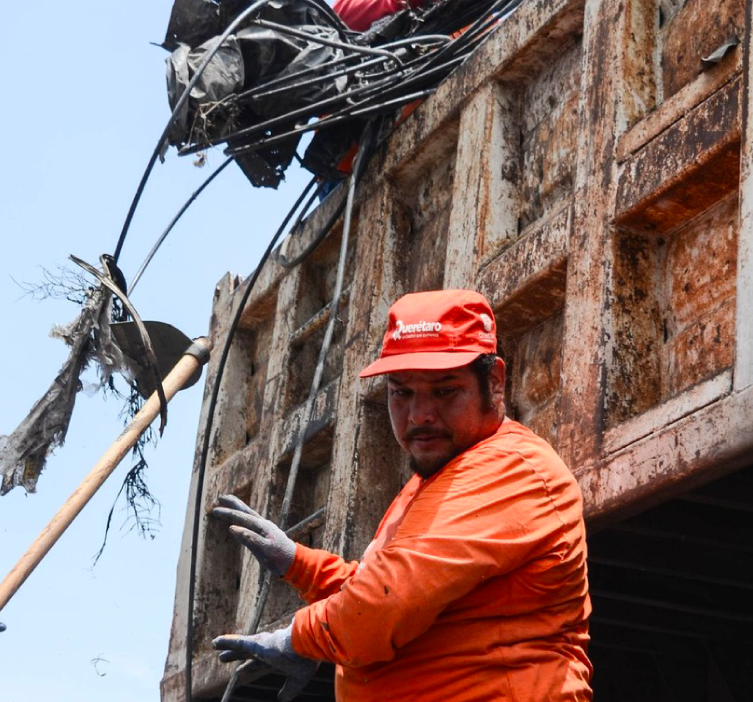
Sanitation efforts contribute significantly to mobility, promote a healthy habitat, and help create a safe environment. In 2024, the volume of waste decreased by 4.7% compared to the previous year; of this total, 72.3% was collected by the Municipality and 27.7% by private service providers.
Public maintenance tasks include tree care and pruning, weed removal, painting of infrastructure and urban furniture, as well as the upkeep of facilities owned by the Municipality.
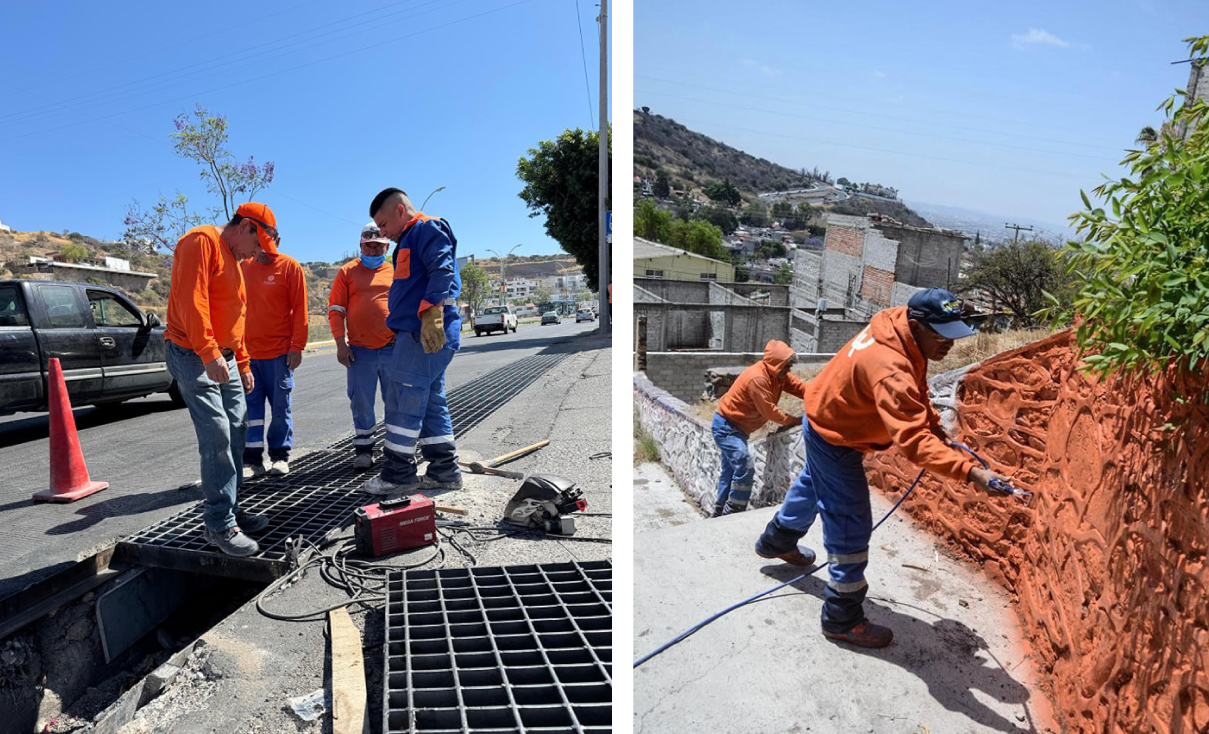
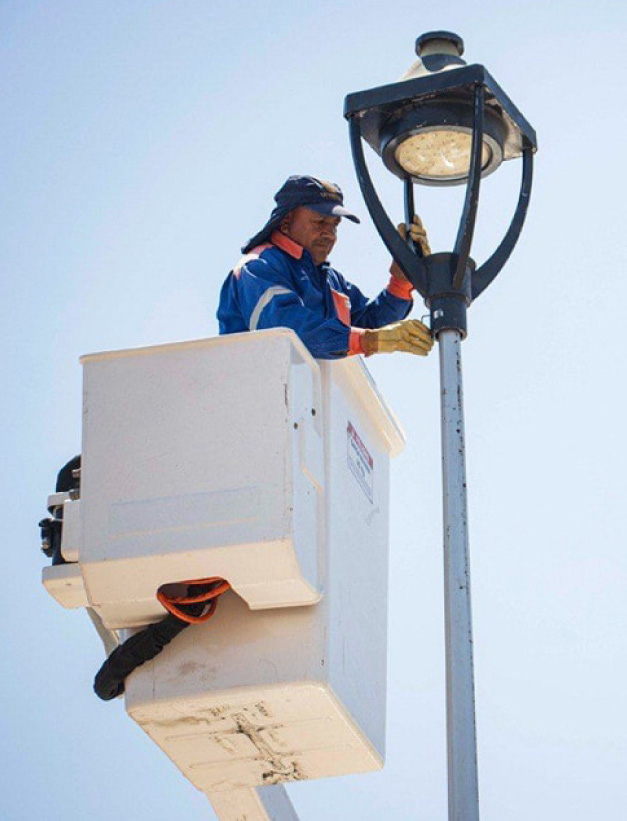
Lighting in public spaces and roadways promotes safety and encourages civic interaction during evening and nighttime hours. In 2024, the number of installed streetlights increased by 2.6% compared to the previous year.
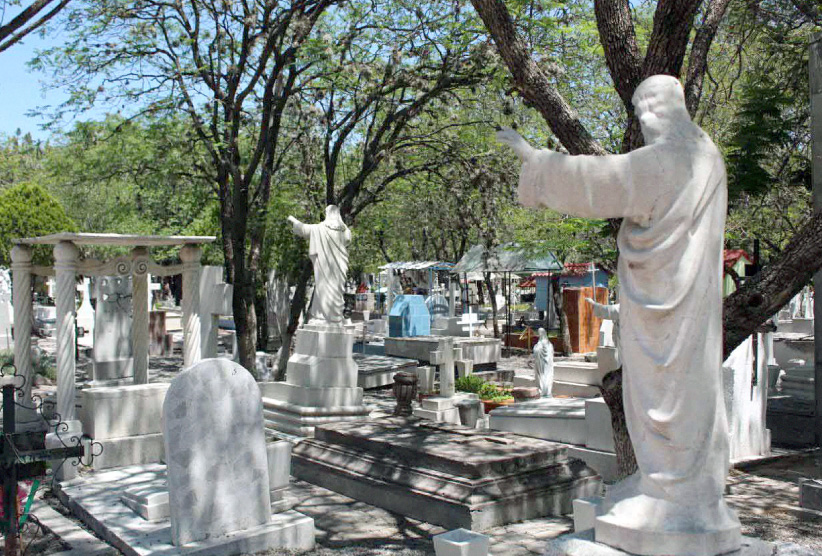
The municipal government is responsible for the maintenance and management of 8 cemeteries located across 5 of its districts. In 2024, total occupancy reached 92.7%. It is worth noting that the Buenavista, Jofre, and Hércules cemeteries are at full capacity.
Environmental management encompasses a set of actions aimed at preventing, mitigating, or resolving environmental issues, with the purpose of promoting sustainable development and preserving the environment.
During 2024, the Municipality of Querétaro, through the Institute of Ecology and Climate Change, implemented 14 projects focused on environmental conservation within the jurisdictio
The Federal Attorney for Environmental Protection (PROFEPA) is a decentralized administrative body of the Ministry of Environment and Natural Resources (SEMARNAT), with technical and operational autonomy. Its main function is to contribute to sustainable development and strengthen compliance with environmental regulations.
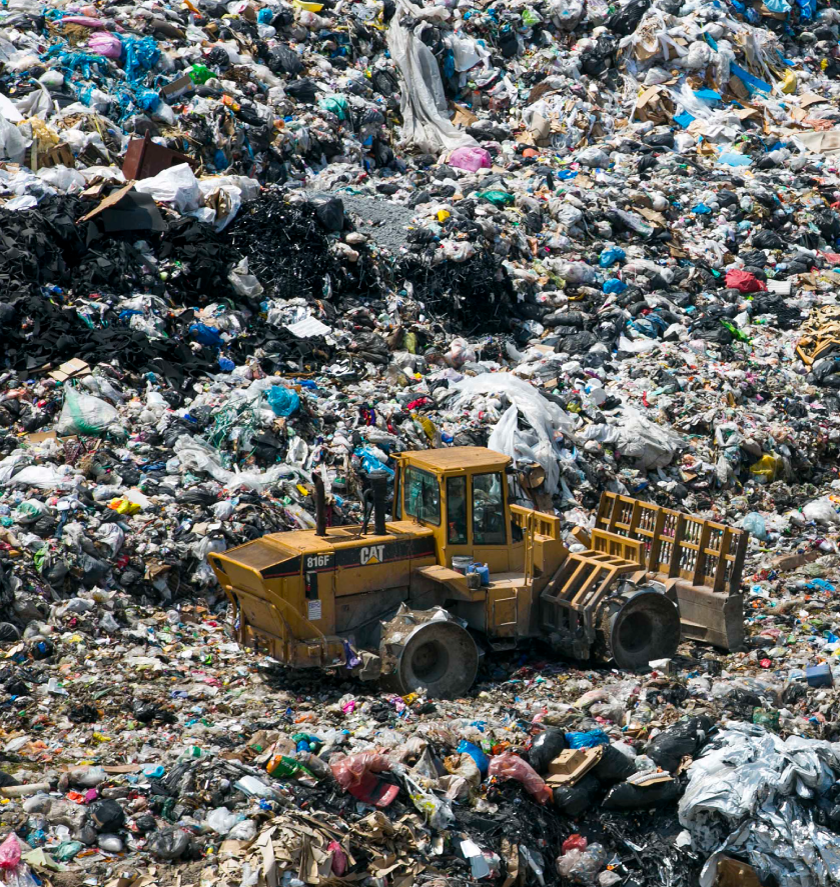
The Ministry of Municipal Public Services, through the Directorate of Public Cleaning and Street Lighting, collects solid waste generated in the municipality of Querétaro, depositing it in the Mompaní Sanitary Landfill. Of the total received in 2024, 72.3% corresponded to waste generated by the general public, while 27.7% came from private sources.
The National Water Commission (CONAGUA) reported that during 2024, the municipality of Querétaro had 63 wastewater treatment plants with a capacity of 2,952.90 liters per second, generating an annual volume of treated water totaling 57,490,778.4 cubic meters.
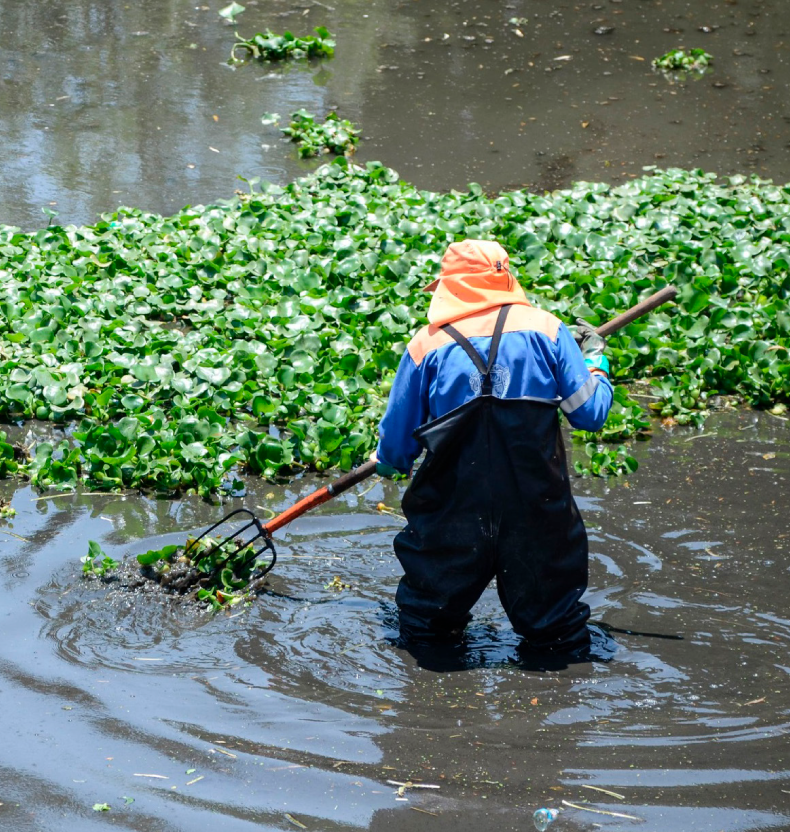
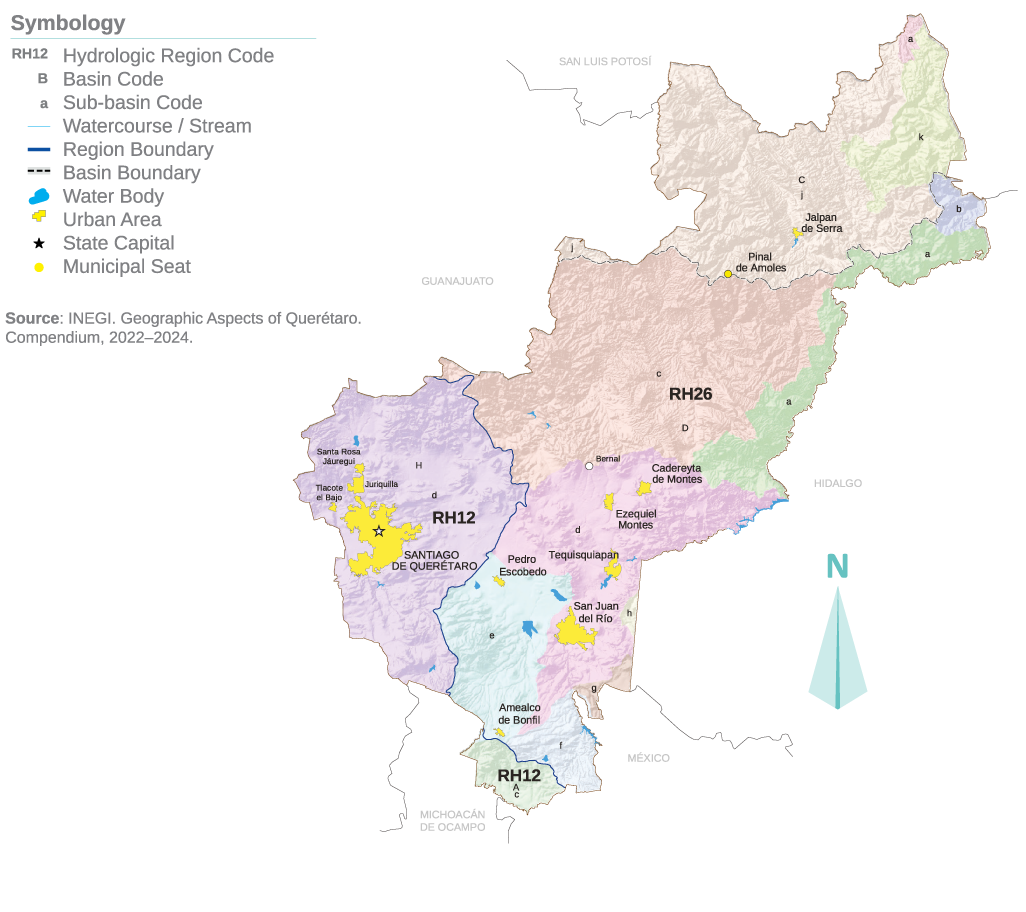
In the state, there are two types of runoff that supply the Apaseo River subbasin, which is part of the Querétaro River basin. This sub-basin includes the stretch from the river’s source to the Ameche Hydrometric Station and has a contributing area of 2,255 km². Geographically, it is located in the central part of the country, between coordinates 20° 15’ and 21° 00’ north latitude, and 100° 05’ and 100° 40’ west longitude.
Two aquifers are located within the boundaries of the municipality of Querétaro, and water is extracted from them for various uses:
• Querétaro Valley Aquifer. Located in the southwestern part of the state, this aquifer spans portions of the municipalities of Querétaro, Corregidora, and El Marqués. It covers an area of 563 km² and is notable for including the state capital, where the majority of Querétaro’s population resides.
• Buenavista Valley Aquifer. Situated in the western part of the state, this aquifer has a total surface area of 319 km² and primarily spans the municipality of Querétaro. It borders aquifers from the state of Guanajuato to the north and west, the Querétaro aquifer to the south, and the Amazcala aquifer to the east.
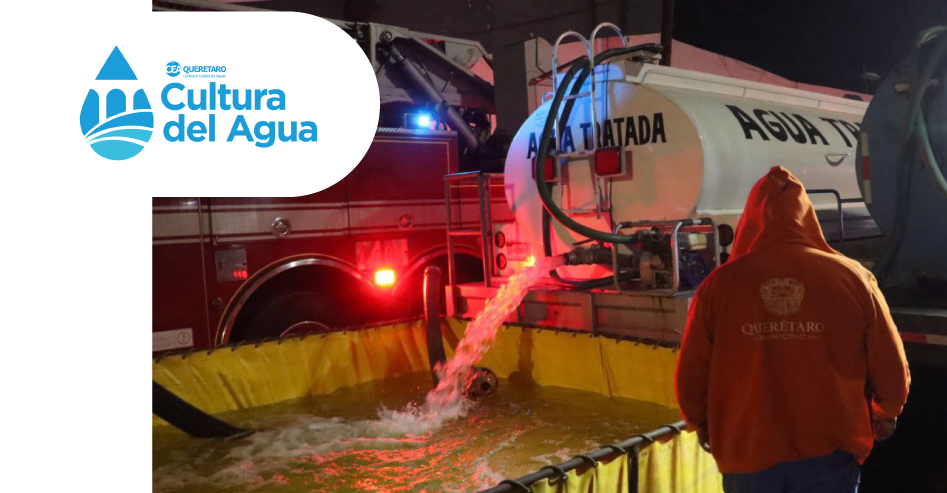
Raising awareness about the care and preservation of water is essential, and must involve active public participation through strategies in communication, marketing, management, and social engagement, in coordination with institutions, organizations, companies, and associations, with the aim of ensuring the sustainable development of the state.
The State Water Commission of Querétaro (CEA) is one of the agencies responsible for the conservation and utilization of water resources. In this regard, four specific objectives have been established:
In the municipality of Querétaro, three units are responsible for animal control, protection, and care, all under the supervision of the Ministry of Municipal Public Services.

This unit promotes and implements public health actions to prevent zoonotic diseases and prevent attacks on the population caused by dogs and cats. It also fosters respectful and humane treatment of animals, legally and peacefully contributing to their protection and well-being.
Its objective is to provide veterinary medical care to improve the health of companion animals, offering low-cost services such as veterinary consultations, deworming, sterilization, assisted euthanasia, and multiple and rabies vaccinations.
Its purpose is to implement, coordinate, guide, and promote actions focused on animal protection through prevention, awareness, and care to ensure their well-being.
In 2024, the services provided recorded an 11.7% increase compared to the previous year. However, reports of animal abuse rose by 68.7%, an issue that remains a focus of attention and social awareness.